Home // Blog
Choosing a Modular Trade Show Booth in 2026 requires more than comparing attractive renders and package prices. Exhibitors must connect booth design with measurable business goals, visitor behavior, sustainability expectations, and transport realities. UFI’s Global Exhibition Barometer highlights operating costs, economic uncertainty, and changing customer expectations as continuing industry concerns. These pressures make flexible booth systems increasingly practical.
The Center for Exhibition Industry Research also emphasizes that exhibitors should evaluate exhibitions through lead quality, audience relevance, and marketing performance. A booth that looks impressive but creates poor conversations can become an expensive storage problem. Measure the details. How quickly can it assemble? Can graphics change between cities? Does the lighting make product demonstrations visible from the aisle? Can one trained team manage the structure safely?
Bob Priest-Heck, former Freeman chief executive and an experienced events industry leader, has said, “The future of events is not digital or physical; it is both.” His observation remains useful for booth planning. A modern Modular Trade Show Booth should support face-to-face trust while connecting with digital lead capture, product videos, and post-show communication. Freeman’s industry research has repeatedly shown that attendees value live experiences for connection, discovery, and confidence in brands.
There is no perfect booth.
The right choice depends on show frequency, floor size, shipping distance, staff capacity, and reuse plans. Some modular systems appear economical but require costly replacement graphics or specialist installation. Others seem plain at first, yet perform better across several shows. This guide examines those trade-offs, using industry research and practical evaluation criteria rather than polished promises. The recommendation may not be the most impressive option. It should be the most defensible one.
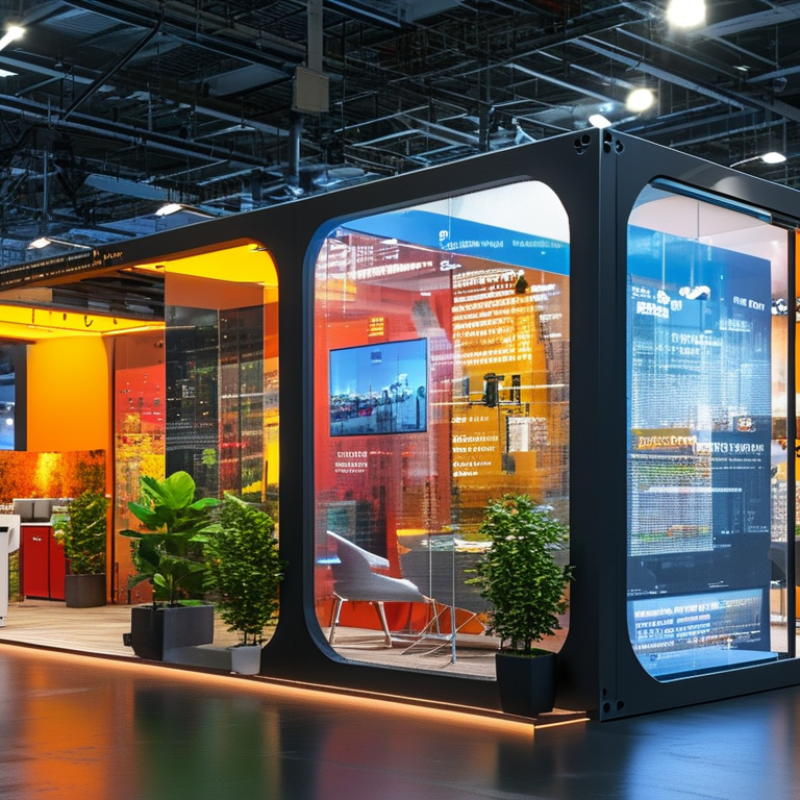
Before choosing a modular trade show booth, define what success means. A practical brief starts with one primary goal, such as qualified leads, product demonstrations, or partner meetings. Be specific. If lead generation matters, set a realistic target and identify the information staff must collect. For demonstrations, reserve enough space for three visitors to stand comfortably. An experienced event coordinator can help test these assumptions before money is committed. Trying to achieve everything often creates a crowded, confusing booth.
Translate the goal into physical requirements. Count staff members, expected visitors, storage needs, seating, lighting, power, screens, and demonstration equipment. The booth should match the venue footprint and support future layouts. Ask for packed dimensions, total weight, assembly time, and replacement-part availability. Confirm electrical, accessibility, ceiling, flooring, and fire-safety requirements through the official venue manual. Do not trust an old floor plan. Venues change.
Measure performance during and after the show. Track meaningful conversations, scanned contacts, meeting requests, and follow-up quality. Use simple signs that explain the visitor’s next step within a few seconds. The booth should also give staff a quiet place to store bags and refresh materials. That detail is easy to miss. A visually impressive structure can still fail if staff cannot reset it quickly or visitors cannot move through it comfortably. Review the plan honestly after each event, including what looked unnecessary, awkward, or more expensive than expected.
How to Choose a Modular Trade Show Booth in 2026?
Modular booth selection starts with the visitor journey, not the floor plan. UFI’s Global Exhibition Barometer reported continued growth in exhibition activity through 2024, increasing pressure on exhibitors to create efficient spaces. A 10-by-10-foot inline booth suits focused demonstrations and short meetings. A 10-by-20-foot layout allows one product wall, a reception counter, and a small discussion area. Larger island booths provide four-sided access, but they also demand stronger lighting, storage planning, and staff discipline.
The booth type should match your sales process. Aluminum-frame systems offer reusable structures, replaceable graphics, and easier transport. Tension-fabric walls create a clean visual field, while hybrid systems add shelves, monitors, or lockable counters. According to the Center for Exhibition Industry Research, exhibit space and attendance remain important performance indicators, so measure leads per square foot rather than judging appearance alone. A 20-by-20-foot island may look impressive, yet unused corners can weaken engagement. Keep circulation open. Leave roughly three feet around active demonstrations. That detail is easy to ignore.
Configurations also affect setup risk. Straight-line layouts are simple and predictable. L-shaped designs separate product education from private conversations. Perimeter-access islands invite traffic from multiple directions, but they need clear messaging on every side. In my experience, teams often overbuild storage and underbuild seating. That choice deserves a second look. Test the layout with real cases, staff, and sample displays before ordering. Data reports can guide decisions, but venue rules, audience behavior, and your team’s habits still determine performance.
Material choice shapes transport, appearance, and long-term value. Aluminum frames are light, strong, and easy to repair. Fabric graphics usually fold into compact cases and reduce shipping volume. However, thin fabric can wrinkle under bright exhibition lighting. That detail is easy to underestimate.
Portability should be measured, not guessed. Record the packed weight, case dimensions, and assembly time before purchase. UFI’s Global Exhibition Barometer shows that exhibition activity continues to recover across major markets, increasing the need for flexible booth systems. A modular design can adapt from a small regional show to a larger international floor. Reusability matters too. CEIR research on exhibition value emphasizes repeated face-to-face participation as a key business investment. A booth that accepts new graphics, shelves, counters, and lighting can protect that investment. Yet, reuse is not automatically sustainable. Damaged parts, disposable flooring, and frequent air freight can weaken the environmental case.
Tips: Choose replaceable components. Ask for a repair plan. Test one full setup before ordering multiple units. Compare the booth’s three-year cost, not only its purchase price. I would also question impressive sustainability claims without material records or lifecycle evidence. Sometimes, a heavier frame feels more durable, but that feeling may not justify higher transport emissions. Keep the design simple. Simple systems travel better.
How to Choose a Modular Trade Show Booth in 2026?
A modular booth should express your brand within three seconds. Use consistent colors, readable type, and one memorable message. Avoid covering every wall with product claims. Visitors often scan while walking, not studying. CEIR reports that 81% of exhibition attendees influence purchasing decisions. That makes clear branding commercially important, not merely decorative. Build the booth around one useful conversation. A flexible frame also helps you resize graphics for different venues. In practice, I have seen attractive booths fail because their message was difficult to repeat.
Technology should remove friction. Consider touchscreens, QR codes, appointment tools, and live product demonstrations. Each feature needs a human purpose. A screen without trained staff becomes expensive wallpaper. Freeman’s 2024 Trends Report found that 91% of attendees consider in-person events valuable for professional growth. Digital tools should strengthen that human value. They can collect qualified enquiries, show product comparisons, or continue a conversation after the show. Do not assume every visitor wants an app. Some people prefer a short explanation and a printed takeaway.
Tips: Test the visitor journey before shipping. Stand three metres away and read the main message. Track scans, conversations, demonstration starts, and qualified leads. Ask staff which questions repeatedly caused confusion. Then adjust the layout. A perfect plan rarely survives real foot traffic.
| Assessment Dimension | Recommended Benchmark for 2026 | Why It Matters | Visitor Impact | Priority | Verification Method |
|---|---|---|---|---|---|
| Modular Reconfiguration | At least 3 layout configurations using reusable frames, counters, shelving, and graphic panels. | Allows the same booth system to adapt to different floor sizes and event formats. | Creates a more relevant visitor journey at each event. | Very High | Request scaled floor plans and a component inventory. |
| Brand Visibility | Primary logo or message visible from approximately 20–30 m, with clear sightlines from main aisles. | Visitors need to identify the booth quickly in a crowded exhibition hall. | Improves recognition and supports wayfinding. | Very High | Review elevation drawings and a sightline mock-up. |
| Graphic Flexibility | Tool-free replacement of fabric or rigid graphics, with support for at least 2–3 campaign versions. | Campaigns, product priorities, and regional messaging can change between events. | Keeps the booth visually current and easier to understand. | High | Inspect graphic attachment methods and print specifications. |
| Lighting and Message Hierarchy | Even, low-glare LED lighting; one primary message, supported by no more than 3–5 secondary points. | Lighting attracts attention, while message hierarchy prevents information overload. | Makes the booth easier to notice and scan within seconds. | High | Test lighting in a darkened space and review a visual hierarchy plan. |
| Digital Display Capability | Commercial-grade displays with HDMI or wireless content options, secure mounting, and accessible power management. | Digital content can demonstrate products and update messaging without replacing the entire booth. | Supports demonstrations and increases dwell time when content is concise. | High | Confirm screen specifications, mounting safety, cable routing, and power load. |
| Interactive Engagement | At least 1 purposeful interaction, such as a product configurator, guided demo, quiz, or touch-enabled content. | Interaction should support a business objective rather than function only as decoration. | Encourages participation and creates a natural opening for staff conversations. | Very High | Run a timed user test with first-time visitors. |
| Lead Capture and Consent | QR or tablet-based capture with explicit consent, required fields limited to approximately 4–6, and offline fallback. | A short, reliable process improves data quality and reduces visitor abandonment. | Makes follow-up convenient and transparent. | Very High | Test the complete flow, consent wording, export format, and offline mode. |
| Visitor Flow and Accessibility | Open entry points, unobstructed circulation, accessible counter sections, readable text, and step-free access where required. | A welcoming layout supports people with different mobility, sensory, and communication needs. | Reduces congestion and makes conversations more comfortable. | Very High | Review the floor plan against venue accessibility rules and conduct a walk-through. |
| Staff Interaction Zones | Separate areas for greeting, demonstration, focused discussion, storage, and staff preparation. | Clear zones prevent staff from blocking demonstrations or overwhelming casual visitors. | Creates smoother transitions from attraction to qualified conversation. | High | Map visitor journeys and conduct a role-play with the event team. |
| Portability and Installation | Packable components, labeled cases, documented assembly instructions, and installation requiring minimal specialist equipment. | Simpler logistics can reduce setup time, handling risk, and labor complexity. | Ensures the booth is ready and visually consistent before opening. | Medium | Request packed dimensions, total weight, setup duration, and installation requirements. |
| Sustainability and Reuse | Reusable structural parts, replaceable graphics, recyclable materials where practical, and documented end-of-life options. | Reusability can reduce material waste and support consistent multi-event deployment. | Demonstrates responsible event planning without sacrificing presentation quality. | Medium | Ask for material details, reuse plans, packaging information, and disposal guidance. |
| Total Cost of Ownership | Compare purchase or rental cost plus graphics, freight, storage, labor, technology, maintenance, and expected reuse across events. | The lowest initial price may not be the lowest long-term cost. | A dependable booth protects the visitor experience over multiple events. | Very High | Build a three-year cost comparison using the same event assumptions. |
Choosing a modular trade show booth in 2026 starts with a realistic budget, not a glossy design. Separate the estimate into structure, graphics, lighting, furniture, shipping, installation, storage, and labor. Request itemized prices, because a low headline quote may exclude essential services. Add a 10–15% reserve for damaged graphics, venue changes, or urgent freight. Small details matter.
A reliable booth provider should explain materials, production stages, delivery dates, and safety procedures clearly. Ask for recent project photos, client references, and a sample contract before paying a deposit. Confirm who handles venue rules, installation permits, electrical coordination, and dismantling. Ask whether the frame can be reused for different booth sizes. Measure twice.
During provider interviews, notice how carefully they ask about visitor flow and staff needs. A professional team should discuss storage, meeting space, accessibility, lighting glare, and cable placement, rather than focusing only on appearance. Request a scaled floor plan and a revision schedule. A written approval process prevents expensive misunderstandings. Still, even careful planning has weak points. Graphics may look darker under venue lighting, and shipping windows can change suddenly. Test printed samples when possible, and keep critical files available for quick corrections. Reliability is shown through documented communication, realistic timelines, and honest answers when a request exceeds the budget.
Set a realistic budget first, then select a reliable booth provider with transparent pricing, reusable components, dependable delivery, and responsive support.
Planning benchmark: A balanced modular booth budget typically prioritizes the exhibit system and graphics while reserving funds for logistics, installation, accessories, and unexpected costs.
© Copyright 2025 PolyFab Plastic Industry LLC. All Rights Reserved.
